Apollo and Daphne
Written in 2014.
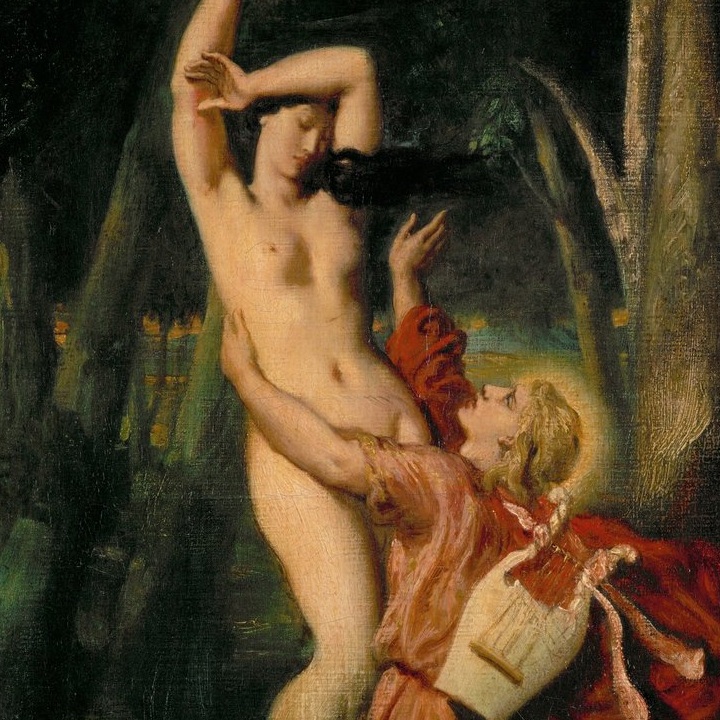
In the myth of Apollo and Daphne, Apollo angers Eros, the god of love. Eros shoots Apollo through the heart with a gold arrow, making him fall in love with the beautiful nymph Daphne. Eros then shoots Daphne through the heart with a lead arrow, making her scorn Apollo. Apollo relentlessly pursues Daphne, but she spurns him. In the end, to escape his advances, she turns into a tree.
The modern world is a bit like Eros. Men are full of desire for women, while women are full of contempt for men.
Recently, I read some articles about the problems women have finding good men. One article was about how women are harassed by “creeps” on dating sites. The evidence for this was that women receive 17 times more messages from men than men receive from women. Another article was about how most men are too shy to approach women. According to the article, men have become “wimps”.
Either men are too aggressive and creepy, or they are wimpy losers who won’t approach women. What happened to all the good men? Did they all turn into creeps and wimps?
I don’t believe that men are worse now than they used to be. If anything, men are probably better in absolute terms: healthier, more educated, richer and even taller. Why are women lamenting a mythical age of male greatness that never existed?
Women perceive men as weak and useless, because the modern woman doesn’t need a man. It’s that simple. She doesn’t need a man to support and protect her.
In the past, women needed men to survive, and men needed women to reproduce. Our emotions are adapted to bring about that exchange: male productive and protective services for female reproductive services. That deal (the sexual contract) is built into our emotions and our bodies. Sex roles are mostly biological.
See The Sexual Contract.
Modernity was created by two revolutions: the industrial revolution and the sexual revolution.
The industrial revolution, and especially the huge input of energy from fossil fuels, made physical labor and strength less important. That was the first step in making men less valuable to women as individuals. But men were still needed to invent, build and operate the machines. Also, as long as women were still having kids, they needed husbands to support them. Industrial civilization made life easier for both sexes. The woman could stay home with the kids, her housework made easier by modern conveniences, such as running water, electricity, a refrigerator, a washing machine, etc. The man could work at a job where his labors were also reduced by mechanical devices.
Then came the sexual revolution, due to effective birth control and the increased participation of women in the work force. Women started to put careers before children. Birth control made it possible to have sex without reproduction. The requirement of marriage became less important, and sex outside marriage became more socially acceptable. A woman no longer needed a man to protect and support her. If she wanted sex, she could easily find a man willing to provide that service — at least, while she was still young and attractive. If she did have children outside marriage, the welfare state would support her and her children.
Women still depend on the collective efforts of men to maintain civilization, but a woman no longer needs a man.
Men have stronger sexual attraction to women than vice versa, for biological reasons. If a woman has sex, she is potentially making a huge commitment to raising a child. If a man can get sex without commitment, he can potentially reproduce for free, at the woman’s expense and also at the expense of other men. Our emotions reflect this difference in the costs and benefits of sex for men and women. Men have a stronger desire for sex. Women have a stronger desire for commitment. In addition, women are more selective. Men want many mates. Women want high quality mates.
Men need the reproductive services of women. So, men are attracted to signs of fertility in women, such as youth, full breasts and an hourglass shape. In the past, women needed the protective and productive services of men. So, women are attracted to signs of physical and social power in men, such as strength, height and social status. Also, women are simply less attracted to men, and more attracted to what men can do for them. In the past, a woman might want a man because she wanted food, shelter and protection, not because she wanted the man per se.
Men want beautiful young virgins. Women want heroes who can save them. It’s a stereotype, but like most stereotypes, it has a basis in reality.
There is also a difference in the roles that men and women play in the mating game. Men pursue women, not vice versa. Men display their power by their ability to physically or socially acquire a woman. Women display their sexual power by their ability to attract high-quality men.
In modern civilization, women have retained their perceived value to men. They still display the signs of fertility, even if they have rendered themselves sterile with the birth-control pill. Men instinctively want to have sex with nubile women. By contrast, men have lost their perceived value to women, because women no longer need the protective and productive services of men. A man has to be very physically attractive to be the equal of an average-looking woman in the mating game. One sex has lost its appeal to the other.
The attraction | pursuit dichotomy makes matters worse. Most men have no effective way of pursuing women. Women have more agency in the modern mating game, because they have a greater power of attraction. Women could use their greater sexual agency to pursue men, but they lack the instinct to do so. Instead, they maximize their attractiveness, and then complain that there are no good men, while rejecting the men who try to pursue them.
Modern civilization created a sexual imbalance. It gave women more sexual agency than men. Ironically, this made men less attractive to women.
This situation isn’t anyone’s fault. It is an unintended consequence of modern civilization.