The BLM Effect
Written in December, 2024. This is an updated version of an essay previously published in Lucifer’s Question.
The death of George Floyd in May 2020 caused a widespread moral panic about racism and policing, which was commonly called the “Black Lives Matter” movement (BLM). Many local governments, especially in large cities, responded by reducing police activity in various ways.
See George Floyd and the Madness of Crowds.
In this essay, I will assess the effects of the BLM movement on mortality in the US. As expected by some of us, there was a big increase in the homicide rate in 2020.
Cause-of-death data are from the CDC. Note that most Hispanics are classified as “White” in the data. G7 homicide rates are from the World Bank.
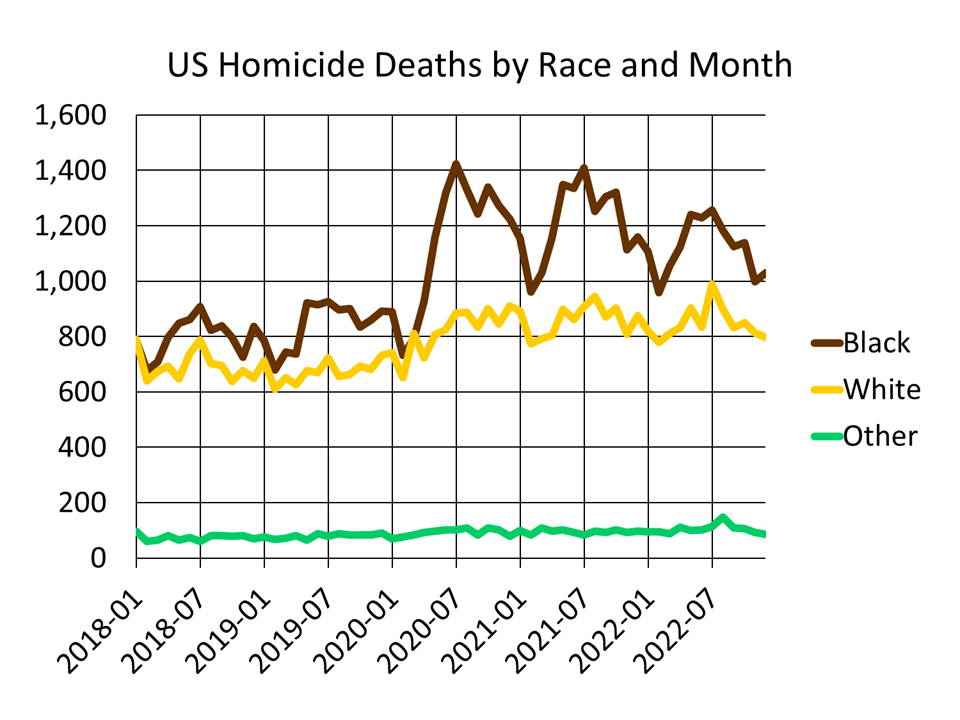
As you can see, there was a large increase in the homicide rate immediately after the George Floyd incident. The increase was highest in the black population, who are the majority of homicide victims and offenders, despite being roughly 13% of the population.
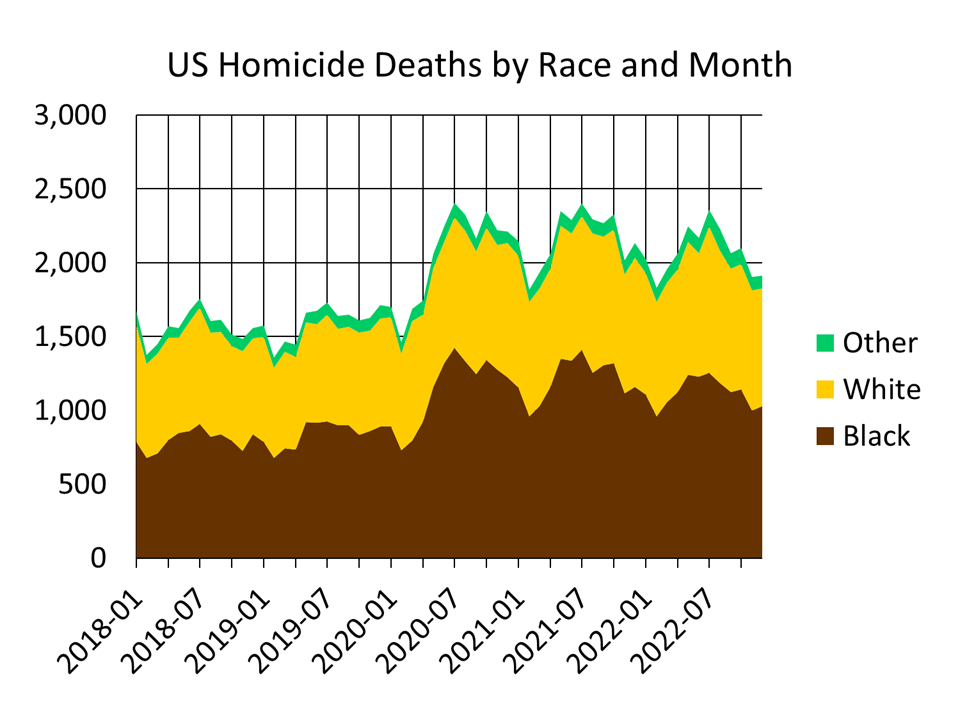
The chart above shows the same data, in stacked format, so that you can see the total increase in the homicide rate.
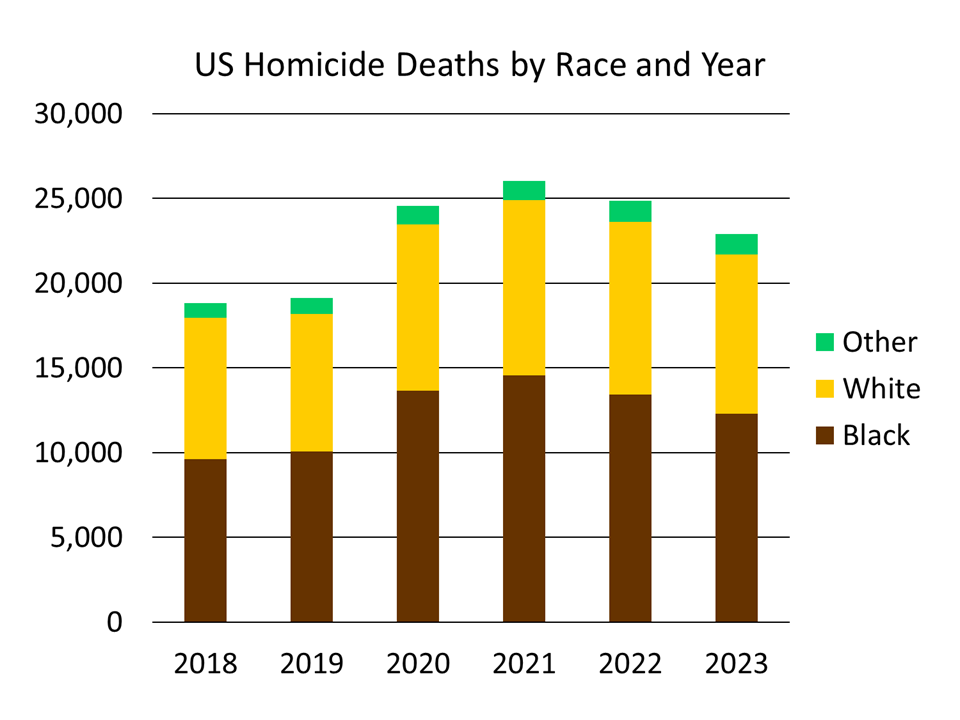
The preceding chart shows the homicide deaths by race and year. The increase was highest in 2021, as you would expect from an event that occurred in the middle of 2020 and had long-term effects.
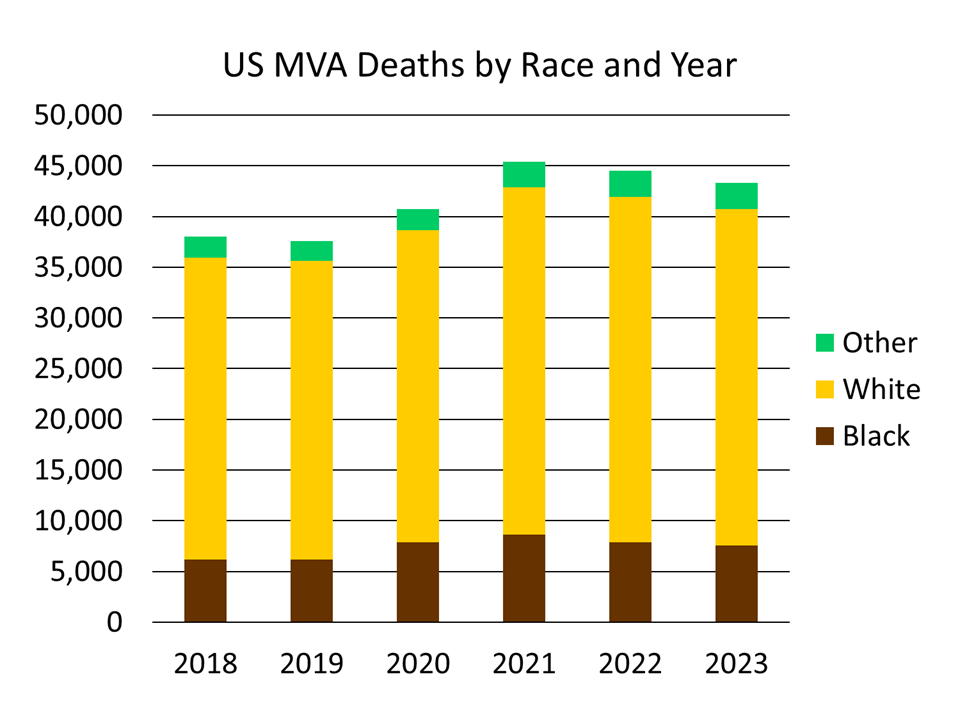
The preceding chart shows deaths by motor vehicle accidents during the same time period. There was also an increase in the death rate from traffic accidents, as you would expect from depolicing.
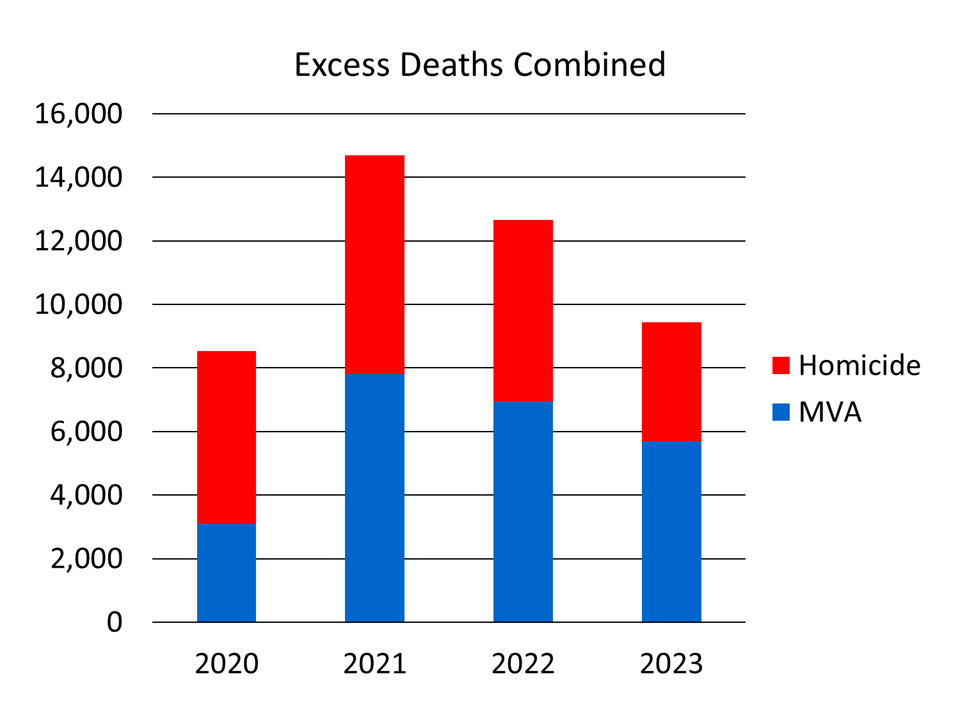
The preceding chart shows the excess deaths, calculated by subtracting the number of deaths in 2019 from the amount for each year after 2019. In total, there were 21,782 excess deaths from homicide during those four years, and 23,584 excess deaths from motor vehicle accidents, for a combined total of 45,366.
This is just a crude approximation, but it gives some idea of how many deaths were caused by BLM. Of course, we don’t know what would have happened otherwise, but it is reasonable to assume that the death rates for homicide and motor vehicle accidents would not have increased much, if at all. There could be other factors involved, such as illegal immigration, but the data fit the depolicing hypothesis very well.
I did not consider other causes of death, such as drug overdoses, which could also be affected by depolicing. We should also keep in mind the many victims who did not die, but suffered from injuries due to violence and motor vehicle accidents. There were other effects of the mass insanity, including rioting and looting in many cities. But the biggest effects were probably due to depolicing.
Some people will try to argue that the increased homicide rate was due to the COVID-19 pandemic, but that explanation does not fit the evidence. If the increase in homicide was due to COVID-19, we would expect to see a similar increase in other countries.
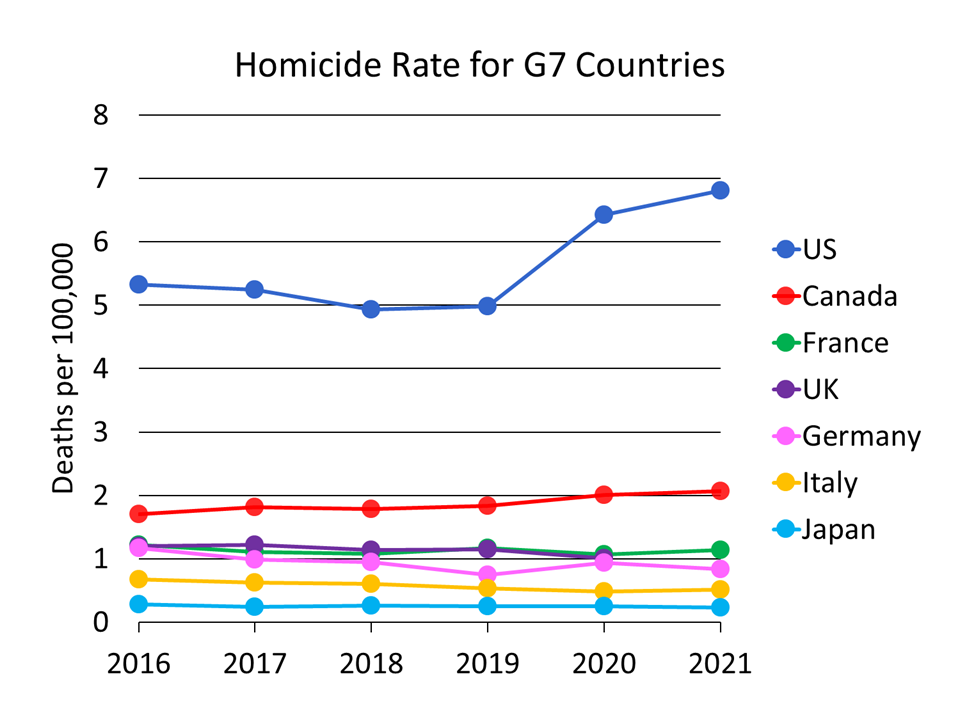
The preceding chart shows intentional homicide rates in G7 countries for 2016 to 2021. None of the other G7 countries had a big increase. Canada had an increase of roughly 7% between 2019 and 2020, which was partly due to an ongoing trend, and partly due to a single case of mass murder with 22 victims. Canada is also going through a similar moral mania about its native population (which has a much higher homicide offending rate) and is highly influenced by the United States. The higher homicide rate of the United States overall is mostly explained by racial demographics.
Human nature responds to incentives. We need the police to maintain public safety. Policing creates incentives that deter crime.
The BLM effect shows how mass irrationality, due to virtue signaling, has real-world consequences.