The Walrus and the Nihilist
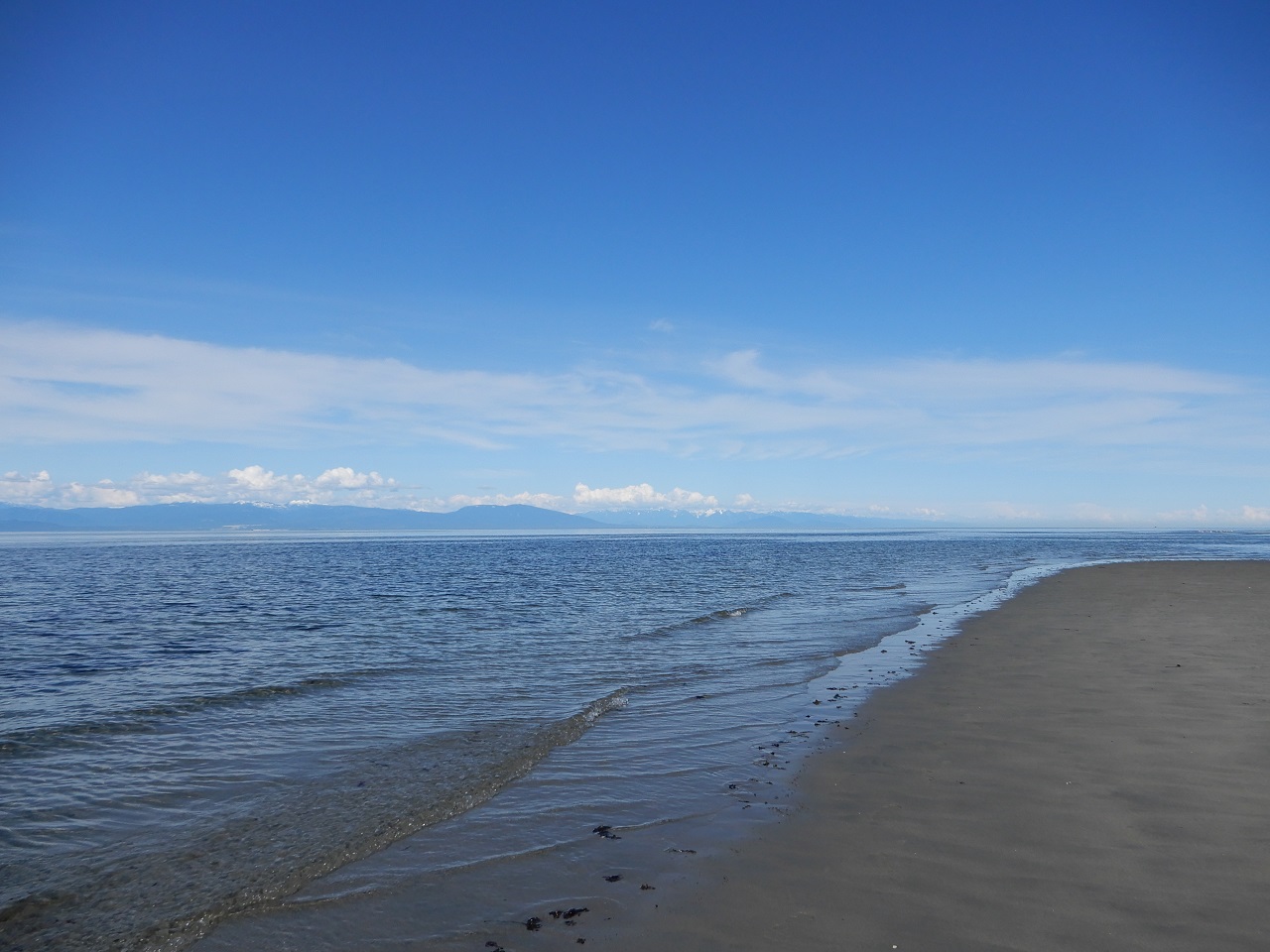
A walrus and a carpenter were walking on the beach, as they often did. It was a warm summer day with a light breeze. The walrus looked into the blue sky, and sighed a deep sigh. He was caught up in the moment, experiencing the flow of sensations. The carpenter, on the other hand, was deep in thought. He had been thinking furiously as they walked along. Now, he felt the urge to express himself.
“You know, old friend,” he said to the walrus, “Our discussion of nihilism the other day got me thinking about meaning and purpose. After thinking about it, I came to the conclusion that there is no purpose to life. And that has cast me into a pit of despair. I don’t know what to do with my life.”
(See The Nihilist and the Carpenter.)
“Ah, I see.” said the walrus, and scratched his chin with his flipper. “You have been staring into the abyss.”
“Yes.” said the carpenter. “You could put it that way. I feel that there must be a purpose to life. In a way, my life is filled with purpose. In every waking moment, I choose one thing instead of another. But when I go looking for the purpose of life as a whole, I can’t find it.”
“I understand.” said the walrus. “There is a purpose to each little thing that you do, otherwise you wouldn’t do it. But when you look for a big purpose beneath all the little purposes, you can’t find it.”
“Right!” said the carpenter. “Before our discussion, I just assumed that there was a purpose to life, because I had never thought about it. I had never asked myself the question ‘What is the purpose of life?’. Now that I have asked it, I am aware that I have no answer to it, and never did. That makes everything I do seem pointless. If there is no purpose to life, then there is no purpose to doing my work, or going for a walk, or doing anything else. It’s all meaningless.”
The carpenter said this with sadness in his voice, staring out across the ocean.
“I understand.” said the walrus. “I went through a similar disillusionment process myself, many years ago. Oh, and since you mentioned your work, I wanted to thank you for making me that bookcase. Excellent craftsmanship!”
“Oh, don’t mention it.” said the carpenter, but the compliment made him feel a little better.
“Too late!” said the walrus. “I already did. But back to the purpose of life. I didn’t say that there is no purpose to life. I said that there is no foundation for meaning, truth or value.”
“But doesn’t that imply that life has no purpose?” asked the carpenter. “A foundation for value would be the purpose of life.”
“Well yes,” said the walrus, “but there are different types of purposes. As you pointed out, purposes come in different sizes, and little ones can be based on bigger ones. For example, when you are making a bookcase, each piece of wood has a function within the whole. Each has its little purpose, and that little purpose derives from the big purpose.”
“Sure,” said the carpenter, “but with the bookcase, the whole has a purpose. The bookcase serves your needs (I hope) for storing books.”
“Exactly!” said the walrus. “It serves my needs very well. So the bookcase’s purpose comes from me. My brain values that bookcase. And that value judgment is based on other values. I value reading, and I value being able to find books with minimal effort, and so on. Values come from values come from values. But that can’t go on forever.”
The walrus paused for a moment, stroking his whiskers, and then continued.
“For the moment, let’s assume that we have a reliable method for making truth judgments. In particular, let’s assume that science gives us knowledge of the world. From our previous discussions, I know that you believe in evolution. You believe that your form was selected to reproduce. It follows that the form of your brain was selected to generate actions that lead to reproduction. Do you agree?”
“Yes.” said the carpenter. “I believe in evolution — at least, given that we accept science for the sake of argument.”
“Okay.” said the walrus. “So, reproduction is the purpose of your body, and it is also the purpose of all those little purposes, such as doing your laundry, or buying your groceries, etc. There is one big purpose that generates all those little purposes, and that big purpose is reproduction.”
“That’s true,” said the carpenter, “but I don’t generate those little purposes in that way. I don’t think to myself ‘I must reproduce’ and then derive the goal of making a bookcase from that big purpose. In fact, I don’t think ‘I must reproduce’ at all. Reproduction might be the biological purpose of life, but that doesn’t make it my subjective purpose. If I had been born 200 years ago, I wouldn’t know anything about the theory of evolution, but I would still have had many little desires. I would still have gotten hungry and wanted to eat food. I would still have found women attractive. I would still have done favors for my friends. Subjectively, my desires don’t derive from reproduction, even if that is my biological purpose.”
“Exactly!” exclaimed the walrus. “You don’t consciously derive your little values from some big value, such as reproduction. That’s not how it works. Value judgments just arise in your mind, intuitively. Ultimately, they get their value-content from emotions. You have many different emotions, which have different biological functions. Hunger makes you eat, thirst makes you drink, curiosity makes you read books, and so on. Each emotion has a biological function, and those functions all derive from the biological purpose of reproduction. Emotions evolved to make you reproduce, but they don’t make you want to reproduce.”
“Yes.” said the carpenter. “That describes the predicament, or one aspect of it. I feel that many little things are valuable. I can understand that those feelings are generated by a mechanism for driving behavior, which is part of my brain. I can understand that the mechanism has a function within the brain, the brain has a function within the body, and the body as a whole has the purpose of reproduction. I can understand all of that, and still not feel, subjectively, that reproduction is the purpose of life. Somewhat ironically, the mechanism does not generate the feeling that its purpose is valuable.”
The carpenter continued. “It makes you want to eat when you are hungry. It makes you want to sleep when you are tired. It makes you want to have sex. It makes you want to avoid death and injury. It makes you fall in love. It makes you care about your children. But it does not make you want to reproduce. In fact, for many people, it makes them want to not reproduce.”
“That’s a strange irony of the modern world.” said the walrus. “Modern technology gives us new types of agency, such as birth control, that our ancestors didn’t have. Given this new agency, our emotions often generate maladaptive desires and choices.”
“Nature gave us an implicit purpose, but not an explicit purpose.” said the carpenter.
“That’s a good way of putting it.” said the walrus.
“And there’s nothing that compels me to explicitly accept that implicit purpose. I can believe that I am a reproducing machine, and still choose to not reproduce.” said the carpenter.
“Right.” said the walrus. “All the little purposes feel like purposes, and you can’t really go against them. If you are hungry, you will try to eat. If you are thirsty, you will try to drink. You will seek out sex and love. You will avoid death until it finally catches up with you. Those things come naturally. You can philosophically question whether those little purposes are ‘real’, in some sense. But you can’t really go against them. They are you, in a sense. However, the natural purpose of life does not feel like a purpose. You can go against it, quite naturally.”
“We seem to be going in circles.” said the carpenter with a wry smile.
“Well yes!” laughed the walrus. “But we are getting somewhere. We are clarifying the human (and walrusian) condition of being reproducing machines to whom reproduction does not intuitively seem valuable.”
“That is part of the problem,” said the carpenter, “but not the whole problem. There’s more to it. It’s not just that my natural purpose doesn’t feel like a purpose. It’s also that I have no way to justify it or any other purpose, including those little purposes. There is no ultimate justification for my desires and choices.”
“Okay. Let’s dive into that part of the problem.” said the walrus. “Where does this need for a foundation come from?”
“Uh…I don’t know.” said the carpenter. “Shouldn’t we have a basis for our value judgments and choices?”
“Should we?” asked the walrus.
“It seems that way to me.” said the carpenter.
“The claim that you should have a foundation for your value judgments is itself a value judgment.” said the walrus.
“Yes,” said the carpenter, “and it is intuitive. I feel the need for a foundation. I want a foundation when I contemplate the abyss, in the same way that I want food when I am hungry.”
“But that meal isn’t on the table.” said the walrus. “Nature doesn’t give you a foundation. At least, it doesn’t give you a set of indubitable axioms on which your judgments can be based. You can question any proposed axiom, and thus no axiom is foundational to you. They are all within your ability to examine and question. You are the foundation of them. They are not the foundation of you.”
“Yes, I recognize that.” said the carpenter. “Before you opened my eyes to the abyss, I had a false foundation, which was just my ignorance of the abyss. I had various unexamined and unquestioned assumptions, which created the illusion of a foundation. By forcing me to examine and question those assumptions, you revealed the abyss to me, and put me in my current predicament.”
“That’s what you get for hanging out with me!” said the walrus with a laugh. “However, you are lamenting something that never existed: your lost foundation. Your desire for a foundation can only be understood as the desire for an illusion, or for your lost ignorance.”
“Yes, in a way.” said the carpenter.
“Since you can question any axiom, there is no foundation. It’s like that childhood question ‘What is the biggest number?’. Suppose that X is the biggest number. Add one to X, and now you have a bigger number, so X was not the biggest. Thus, a biggest number does not exist. The same applies to a foundation for subjectivity. You can question any proposed foundation, which means that it isn’t a foundation. Thus, a foundation does not exist.”
The carpenter smiled at his friend. “If anyone heard this conversation, they’d think we’re crazy.”
“Yes, that’s quite likely.” said the walrus. “But not if they had stared into the abyss themselves.”
“True.” said the carpenter. “Then they would recognize us as fellow Abyssians.”
“However,” said the walrus, picking up where he had left off, “you do have a kind of foundation: your nature. You are you. Subjectivity is not radically free. It depends on the brain, which is objective (or so we believe). The brain works in certain ways. You have already presented the evidence for that. You naturally get hungry and want food. You naturally get thirsty and drink water. You naturally fear death. You naturally feel curious and seek knowledge. You have a nature.”
“Yes.” said the carpenter. “I have a nature. I am a brain. My beliefs and actions are not random. They are generated in a regular way by a machine that (as you pointed out) has a natural purpose. Their regularity reflects that natural purpose. I can question that machine (or that machine can question itself), but I cannot be something other than that machine. However, this does not give me a subjective foundation.”
“Right.” said the walrus. “It doesn’t give you a subjective foundation. Nothing can do that, because the machine has no higher authority to appeal to. It can always question itself, and there is no authority that it cannot question. Thus, it is the ultimate authority. The lack of a foundation is also the lack of a higher authority.”
The walrus continued. “The machine can recognize that it is the highest authority, and that it is a machine with a nature. From that perspective, it has a choice: accept itself or reject itself. It can accept its own authority and nature, or it can reject its own authority and nature.”
“If it rejects itself, then it creates a paradox, because it rejects the basis of the rejection. The paradox is not a contradiction. It is analogous to ‘This sentence is false’. It is a self-referential paradox: a loop with a negation.”
“And if it accepts itself?” asked the carpenter.
“Then it creates an anti-paradox.” said the walrus with a smile. “It affirms its ultimate authority, and its authority to affirm that authority. It accepts its nature, and it accepts the acceptance of that nature, and so on. That is a self-referential loop, but without a negation inside it. It is analogous to ‘This sentence is true’.”
“But what is the point of it?” asked the carpenter.
“Well, perhaps nothing.” said the walrus. “Or perhaps everything. The choice between self-negation and self-affirmation is an inflection point. If you choose self-affirmation, then you leap out of the abyss. If you choose self-negation, then you stay in the abyss. Neither choice can be justified before it is made. Only one is justified after it is made.”
“Hmm…” said the carpenter. “You’ve given me a lot to think about, as usual.”
“Now, it is time for lunch!” said the walrus. “All this philosophizing has made me hungry. Shall we head over to the beach café?”
“Sure.” said the carpenter. “I’m a bit hungry myself.”
With that little goal in mind, they walked on down the beach.